 Have you ever wondered what the chakras are and what they do? Are they mystical nonsense, or something real and tangible? An easy google search will let you know that the chakras are energy centers, they represent emotions, associate with different colors and sounds as well as coordinate with our physical body. Albeit they’re not possible to touch, they can be sensed and very much appreciated upon right activation! Chakra activation is a beautiful yoga option if you want to deepen your awareness of how the spiritual connects with mind and body. Mystical indeed, but also very real.  You might have learned that the heart chakra is connected to love and can be “opened”, but, how and why? Like mentioned above, all the chakras correspond with emotions amongst other things, essentially, this creates a flexible framework to inspire how one might experience the chakras. You can think of it as a map, there to guide you, but not an absolute dogma. The first time I clearly experienced my heart chakra was in a regular yoga class about 6 years ago, I didn’t necessarily feel my “heart open” or see colors, but the simple task of thinking intently on someone I loved, meditating on a loved one, created very real sensation of my heart and chest heating up. Besides love and compassion the anahata chakra also corresponds with devotion, the color green, the seed syllable YAM and your thymus gland (your immune system center). Different scriptures mention a large varying number of chakras, as few as 5 and as many as over 100. Variability is pretty consistent (gotta love a good oxymoron) in yoga, because we’re all different. Our focus in this blog (and the upcoming course that I’m guiding this fall) is for the seven chakras model.  We can invoke these things through lots of different techniques. When practicing asana (postures), pranayama (breath control), meditation and more, we stimulate the nervous system which in turn creates chakra activation. Or maybe, we stimulate the chakras, to activate the nervous system? I know this can seem a little blurry, it's a lot more clear when you’re in the experience. Energetically, sometimes stuff gets stuck, numb, overactive, unclear etc, physically, emotionally and spiritually. The chakra model provides a framework for appropriate energy work. You are energy, everything is energy, and experiencing the chakras can guide your BEING towards its natural flow in the universal energy matrix we call life. Is there a difference between aligning, balancing and clearing the chakras? Sure. Again, we’re working with a flexible framework. For example, our chakras intersect with our main energy beam which runs along the spine (shusumna nadi), and can therefore be experienced as misaligned. Energy can also get blocked and will then benefit from clearing. If energy is disproportionate, it can be in need of balancing. Now, you’re not expected to know which of these it is you need, engaging in chakra activation will INFORM you of that. Now when you know a little more about the chakras, what they are, what they do and different ways they can be experienced, you can head to the library or go online to get some good quality insight on how to activate your chakras, but everything is easier with guidance. I have recorded close to a thousand chakra experiences and I would be honored to be your sherpa. Let me know if you have any questions and also, check out my Chakra Informed Yoga course at the CMC this fall!  We’ll start from the root (Mooladhara) and work our way up to the crown (Sahasrara), we’ll do asana (postures). pranayama (breath), mudras (energy gestures), bandhaas (energy locks), mantra (energetic software) and meditation. EVERY CLASS WILL BE ACCESSIBLE with lots of room for individual modifications (whether you’d like to tone it down or spice it up). I will guide you to practice, experience & connect with your own energy! Registration can be a little bit of a hassle since you have to sign up as a student at the college but being on campus enhances those learning vibes. The cost is low, $99, it will take place at the Colorado Mountain College in Aspen, Thursdays and Fridays 10:00 - 11:30 am, from the 15th of September to the 14th of October. There are mats and other props available if you need. Warning, signing up may spark a chain reaction, of you, signing up for all sorts of fun courses!  Om Shanti/With Peace,
Aisha - Ma Abha Anand (Gdds of Blissful Light) I realize the blog has been on a rather long break, sometimes one has to shift ones focus to keep it. Sign up to make sure you're in the loop for when it's up again and then go check out something else I'm up to!
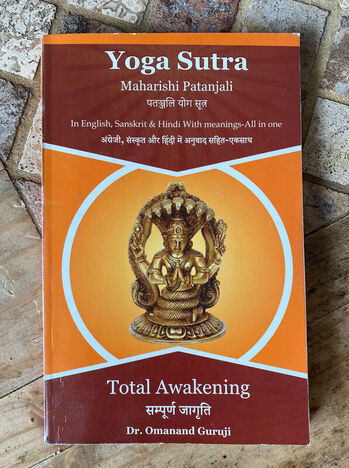
Everybody's Yoga journey lines up differently, there is no set way, we have to take different routes to suit our own alignment.  I just completed the first module of my Yoga Biomechanics course with Jules Mitchell and it didn’t disappoint. First off, picking a Teacher Training (TT) is hard, there are so many out there, and just as it can be scary to muster up the courage to attend a single class with a teacher who is new to you, imagine coughing up substantial amounts of money and submerging yourself in a 1-6 month long (or more) commitment. I was incredibly lucky to get it right for my first Registered Yoga Teacher (RYT) Training. I searched (and searched and searched), picked three qualifiers, and then consulted my favorite local yoga teacher Evan Soroka (check her out, she’s not just local anymore and is doing wonderful things). She used her yogic clarity to pinpoint the right TT, told me “these guys seem legit,” and a few months later, after the gnarliest visa and preparation logistics I’ve ever experienced, I was on my way to the Parmanand Institute, an Ashram in Indore, India.  Guruji, Dr Omanand is a wonderful spiritual guide and teacher. With generational Yoga embedded in his DNA, he has changed lives, my own included.
I traveled to attend an in-person workshop with Jules, took online courses, and attended her book club. The more I learned about the body, the more I wanted to know and Jules was the perfect teacher. This year her RYT300 was offered online and with some financial charity I was able to register. I just finished the first of three modules, and I’m more in love with Yoga than ever. The content I’ve absorbed, combining research literacy, an abundance of science and Yoga, is clearly the right path towards my own perfect educational alignment. My teacher’s surrender to knowledge combined with her faith in Yoga, as well as my classmates' infinite curiosity has dissolved the idea I had about Yogis allowing blind faith to eclipse the truth. There are lots of dedicated yogis in the world, the most mindful ones just aren’t always the loudest. For me, the ultimate truth of the Universal Energies is still best experienced through practice and detachment (and of course the 8 limbs for systematic achievement of this). But for the benefit of my students and patients who might not have the same interest in “Yoga every damn day,” this direct and modern alignment of Yoga and Science is already elevating my confidence as a Yoga teacher and growing seeds for a rich garden of insights to share as a future Yoga Therapist.
Thanks for taking an interest in my Journey! What does your Journey look like? Om Shanti!  According to Yoga and Arejuveda, everything and everyone in our manifest world are of three basic qualities/forces known as The Gunas. Most things and people we encounter are a mixture of the three, however understanding their individual specifications enables us to simplify some of the complexities of life. The gunas are: Satva - Good, pure, light and clear; Rajas - Active, unstable, mobile and passionate; Tamas - Unclear, spoiled, dark, bad and toxic. For example, when we experience something as uplifting and good we are interacting primarily with satva. Comparatively, when something is stressful and painful, rajas are elevated, and when something is depressing, it can be explained as predominantly tamas. You can also identify tamas as regressing, rajas as unchanging (running in place) and satva as progressing.
These same things will elevate satva and create a positive feedback loop where satva breeds more satva. In order to find a flow which improves the balance of satva, you’ll also want to reduce tamas and moderate rajas by practicing good habits that are in line with your personal, moral and physical health. Morals don't have to box you in, don’t be scared of this phrase, it’s not about applying others standards or ideas on to your way of living, it's just about recognizing what stuff makes you feel good vs “sticky” or plain bad. Morals are a matter of code, your code, that you mindfully program yourself with. Morals to me, growing up, were synonymous with one, “righteous path,” which often alluded to one, correct (and boring) way to live. Today I know that my moral observations actually empower me to remain as radical and punk as I want to be. These observations do not limit me but, in fact, honor the rights and wrongs of my inner true nature and simplify my journey to my own destiny. Let's add some more satvic practices to the list, truly, the words alone can become the code of change!
Positivity becomes the easiest to achieve as a continuous circular practice. Elevating satva is one great way to balance. In addition, it's also extremely important to decrease the input (external or internal) of tamas and rajas. Tamasic things to avoid are
Rajastic things to avoid are:
Darkness has a tendency to fester, and the darker it gets, the harder it is for the person that is depressed to recognize light. Of course it's important to acknowledge that you are subject to outside influences and that the world is full of obstacles. Where you live, how safe your environment is, a lack of privilege and support, illness, accumulation of negative experiences and even learned unwillingness, faith and fear, all make it that much harder, sometimes making it feel even impossible to escape rajas and tamas in order to attract satva.
In addition to above techniques for increasing satva and decreasing rajas and tamas, there are many formulas and recipes expressed by many Masters (not just Yogis, although I’m especially partial to all things Yoga since it’s always so inclusive), to initiate this counteractivation in order to minimize suffering and promote wellbeing.  Om Shanti!
Well, luckily, there is a natural, no side- effects fix, Yoga! Obviously, it’s not a perfect cure, but there are some Yogic techniques which can help manage spring allergies substantially.
It is honestly pretty easy, but if you can’t see yourself doing it, an awesome alternative is to get the store bought stuff which comes in easy to use spray variants. That’s what I do. I rinse my nose every day pretty much year round as I have chronic rhinitis and, this time of year, I use it twice a day. These solutions clear up the sinuses from mucus, pollen and any other pollutants we inhale, they also open up the pathways to our third eye!
3. Bhastrika Pranayama - This is a breath practice done by inhaling and exhaling forcefully while letting the main expansion and contraction activate in the chest. Here’s a short and sweet video from Brett Larkin guiding the practice https://youtu.be/im8TYzkhISI. Enjoy!
Namaste! 
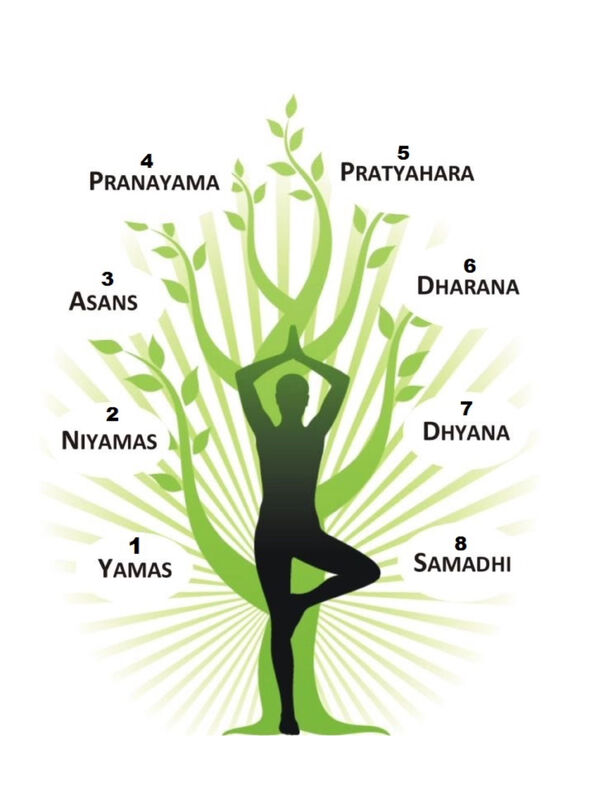
Sometimes I see “The Third Eye,” which mostly appears to me like a purple blob (more than a triangle with an eye) and afterwards, I ALWAYS feel at peace. Meditation can be seen as the goal of the previous 4 limbs of yoga (1. Yama - Moral conducts, 2. Niyama - Right actions for the self, 3. Asana - Postures, 4. Pranayama - Breath control) and it includes the remaining four of the 8 limbs of yoga: 5. Pratyahara - withdrawal of the senses, or as I call it “creating your personal force field,” is an important step which grants you the ability to zone- in to yourself, regardless of your surroundings. I got serious practice with this in India where things are NEVER quiet!
7- Dhyana - Absorbed focus/concentration. The concept of Dhyana is quite abstract and difficult both to understand and attain. In Dhyana, one no longer has to continuously control the focus, but the object of concentration starts to simply flow and “just happen.” It's a pretty sweet reward after so much work, but it's illusive, and if you try to take too much note of it or get too excited about it, it might vanish quicker then it appears. Even a quick unveiling of this experience will leave one with faith in the collective consciousness and a peaceful conviction of the superiority of good.  8 -Samadhi - Bliss, or a total merger with the Universal Energy. Many, including myself, hesitate explaining this last step of Yoga, simply because it's pretty rare to arrive here. My own experience is limited and some would argue that had I truly achieved Samadhi, I’d no longer feel the need to partake in the regular mundane world. I would be questioned as to why I’m not living in an Ashram (Yoga school/temple) and dedicating my whole life towards meditation. However, I have transcended in samadhi (if you know, you know) and I chose to stay in the regular world to share yoga that is attainable for everyone. My encounters with Samadhi have been amazing. They usually come in small glimpses where any and all dualities of the world become obsolete, time is irrelevant and suffering transforms into bliss. Just like Dyhana, you have to refrain from chasing it, approach the experience with zero expectations and just allow it to flow into you. Experiences vary greatly for different people but one thing remains true to most, Samadhi resolves suffering, ie, meditation is the best medicine as it can be done by anyone with an able mind, at no charge and with no negative side effects. My top 3 tips for Meditative success is
Meditation keeps bringing me closer to the innocent little girl I once was, and simultaneously keeps growing me into my most optimized true mature self. It is magic. If my endorsement isn’t enough, conduct a quick google search on “successful people who meditatie” and see what you find!  Hari OM
Because I didn’t grow up sitting on the floor as much as I might have in a different culture, this strategy takes away a little pressure in my lower abdomen, which can enable a deeper inhale and allow my breath to expand three dimensionally. I also refrain from checking my prana from a standing position, as I treasure the slow process of my mind awakening in the morning and standing up is just a bit more demanding. I also avoid laying down, as it changes how I breathe into my back- body.
 Checking the breath is something I continuously do throughout the practice. It’s my main tool which determines if I’m practicing within the Goldilock Rule of Sthira Sukham Asanam; effortless effort. That sweet balance where you’re certainly challenging yourself and working through discomforts, but never going over the edge towards pain. Sthira Sukham Asanam is IMPORTANT! Not doing enough of something in exercise theory is equally as bad as overdoing something and our advantage in Yoga is the awareness we carry (partially through anchoring in our breath) during slow and controlled movements.
 The sea of yoga that is offered out there is not meant to confuse you, it's actually meant to give you opportunity for variety! Yogis are limited to their own experience so this means that sometimes we say or advise things which may not resonate with you. Trust me when I say, we want you to have a practice which enables you to gain the best understanding of yourself, in the most sustainable way, performed with the most uplifting sensations! So, try out some different teachers (Yoga with Adriene has 9mil followers, surly she resonates with many), pick up some books (Jules Mitchell is a badass teacher/scientist who breaks down biomechanics), visit studios, sniff around the world- wide- web. Try it with both live and recorded classes, and then proceed to absorb. Soak up what is useful to you, forgivingly filter what is nonsense (for you,) have some fun, and JUST DO IT… for YOU!! NAMASTE! 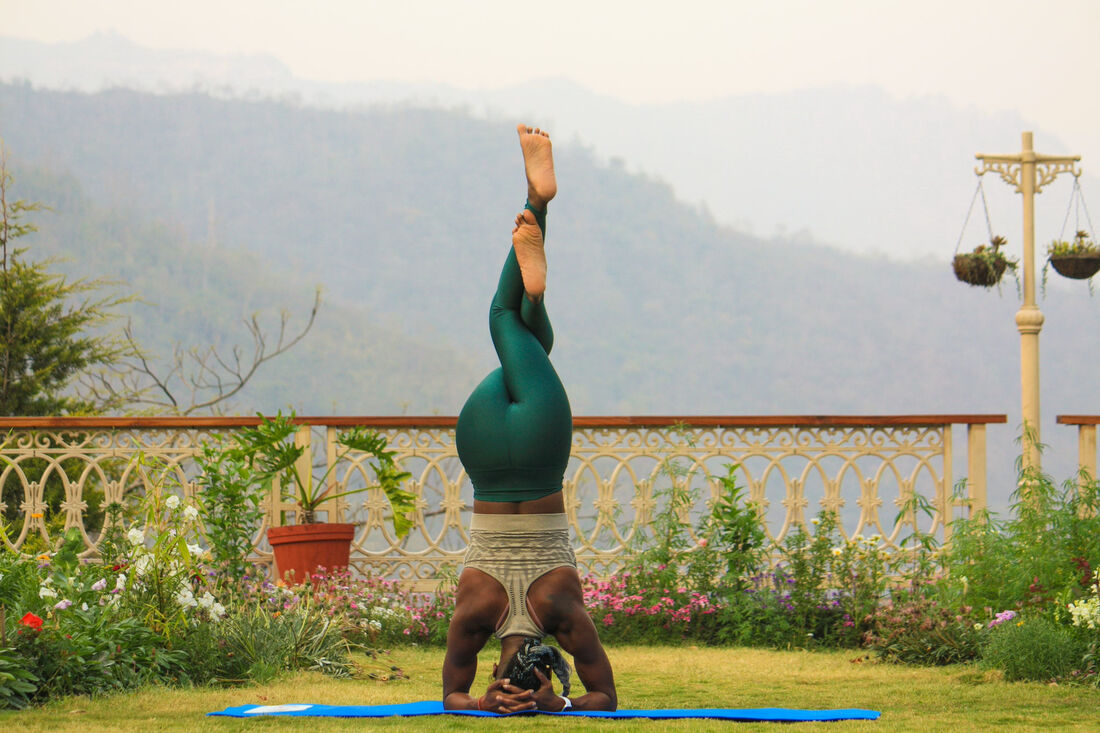  Being in the habit of a regular Yoga practice brings fantastic side effects to the practitioner. As soon as I discovered it, I started practicing semi- regularly about 3 days a week, with some seasonal breaks between 2005-2016. The yoga I practiced then was a westernized, studio- Yoga such as Vinyasa Flow. The classes I went to would consist of an aerobic and usually sweaty asana (posture) practice and lots of Ujjai breathing (specific pranayama/breath practice involving a constriction in the throat which has a heating as well as engaging effect on the core to support the rapid changes of flexion and extension). There’s nothing wrong with that! Especially when your 20- something brain and body have lots of extra energy to burn.
The trick is to incorporate Yoga into your life as a holistic practice, rather than just an exercise routine. In fact, those thousands- of- years old scriptures that us Yogis love to brag about, say almost nothing about the Asana practice typical to westernized yoga. When Asana is mentioned, it is usually a seated posture and is almost always in the context of preparing for Breathwork (Pranayama) and/or meditation.  Breathwork is the practice and exercise of breathing. As a western Yoga teacher, I like to reference the circulatory system and how the breath is directly responsible for facilitating the cellular processes of the body. “Nutrition in/inhale and waste out/exhale,” is a simplified way to understanding the benefits of breathwork. The traditional philosophy, which has been practiced and documented for thousands of years, allows us to go even deeper. Pranayama which directly translates to “life- force control” is the practice and work of creating, exploring, growing, following, and directing your life- force (Prana in sanskrit). And, guess what! If you practice dedicated and focused control of your life force i.e. breath, you’re practicing Yoga!
Pranayama is generally done sitting (exceptions exist) and similarly to how an asana is a preparation for pranayama, pranayama precedes meditation, and meditation is BLISS! I’m tempted to tell you about all of the steps within meditation, but really, meditation deserves it’s own blog. What I can say is this; there are 4 levels leading to the complete, meditative Yogic state. The Patanjali Yoga Sutra along with other scriptures, refer to these steps and yogic states and make it clear that achieving them is an extremely difficult task!
So, if aerobic yoga everyday may be unhealthy, breathing happens all by itself making it hard for many to motivate themselves to practice it, and meditation can be abstract and difficult to do, how the heck does one practice Yoga every damn day? Well, so far in this blog we’ve touched on the final 6 of the 8 limbs of Yoga, (asana-3, pranayama- 4, meditation- 5,6,7,8). We have not yet talked about the first two limbs of Yoga which are Yama and Niyama. Yama and Niyama consist of 10 guiding principles concerning morals and codes of conduct, that are proven to help one live better. They are things you can and should incorporate into life (yours and others) as much as possible. They are: not harming, not stealing, moderation, truth, not hoarding, cleanliness, discipline, contentment, self- study, and surrender!  Including the Yamas and Niyamas isn't only a clever and practical way to get your practice on a more frequent track, it’s also the prerequisite for the yogic limbs that follow (asana- pranayama- meditation). It is the initial balancing of your being and environment so that you can safely engage in all of the other steps that lead you to connect with your true and blissful self and the collective consciousness. Do good for yourself! Set yourself up for a sustainable, everyday, year- round Yoga. Include all of the holistic goodies beyond the physical practice and find joy in the invitation to creatively customize Yoga to find your own balance. Finding your own balance will make you feel better, become more productive, more focused and more flexible. It will all begin to take shape for you which will inevitably train you to want more of it! That is what I strive to do, and that is how you can create that good habit loop which continuously sustains YOU.  The year is sprinkled with special days on which we get to wish each other “Happy This”, “Merry That”, “Good Day” and lots of other nice things! I’d like to refer to this as a Good Mantra. Mantra is typically described and often thought of as a word or phrase that Yogis practice reciting. The word itself has power, so does the act of reciting it, believing it, sharing it, writing it and reading it. Manifestation is a good, modern and relatable translation. So I manifest your understanding of Good Mantra and how it's Good Stuff!  OM is the Mantra representing the sound of the universe, practicing this mantra harmonizes the vibrations of the supreme and divine consciousness. Now, it’s not everyone's expertise to be genuinely cheerful, wishing everyone a good day and happy lives all the time, that's ok. Remember to not practice bad mantra on yourself (out loud or in the mind). “If you can't say something nice, don't say anything at all”, is good advice from Thumper in a cute Disney rendition of good mantra. Also, it’s called a practice, so take your most fun and advantageous line through it. Happy New Year is a powerful Mantra of best wishes to everyone for a whole freaking FRESH YEAR! Let's put our collective powers to use and all practice a little bit of Good Mantra, see where it takes us :) Tip-Top!  Because chocolate advent calendars aren’t that good for you.  1. Take a seat and treat yourself to a gentle exercise for the throat and neck. Creating awareness around this physical part of your body is one of the best ways to rid yourself of tension and stress that might linger around this holiday season. Pick up my guided version on the page Yoga Anywhere, Anytime and use the code OM at checkout to receive it for free! (offer expires 12/8/2020) When you perform this mudra it is also believed to channel the God Brahma, the creator of the world who has four heads pointing in all directions. 2. Set a timer for two minutes. Try to choose a gentle tone or set the timer to vibrate. Standing straight or sitting without a backrest, close your eyes and without any judgement listen to your breath. That's it! 3. Dig into the truth of something. Next time you’re feeling bored, instead of checking your e-mail or social media, spend 15 minutes researching something that you’re curious about! For example, ‘Where do my hummingbirds spend christmas?’ Or, ‘What clever solutions have humans implemented to combat historical plagues?’ Avoid indulging in sensational information, recognise propaganda and use critical thinking to take you closer to the truth!
5. Spend some quiet time with just yourself. Go for a walk or shut your door, turn off all ringers and notifications, tell your household to respect your solitude and try, just try, to not think about anything for 3-30 minutes. In Yogic Practice this is called Maun. It can be very difficult in the beginning, but will eventually start having profound effects. 6. Practice moderation. Cut back on screen time, eat less of something delicious, abstain from saying/thinking something negative about someone or simply ask yourself, ‘Can I cut back on this one thing (anything!) just for today? 7. Pray. No rules as to whom or about what. Simply spend 1-3 minutes with your eyes closed, perhaps bring your hands close to your heart and practice connecting with the universe.  8. Recognize an unnecessary rule that you are obsessed with and break it. This is not for the sake of being naughty, but rather to practice letting go of micromanaging yourself. 9. Use social distancing to your advantage to abandon the company (online or IRL) of someone who is uninspiring, unmotivating, and unsuitable to you and your goals in life. Don’t be cruel about it, don’t kick someone who’s down, but do use our current situation as a great opportunity to purify your social structure. 10. Create awareness around your hips and shoulders to allow yourself to more easily relax. Pick up Yoga Quick Fix with focus on the hips and shoulders on the page, Yoga Anywhere, Anytime and use the code SHANTI at checkout to receive it for free! (offer valid 12/10-12/17/2020)
12. Reach out to someone. Write a letter, text, email or post and let them know that you are thinking of them! 13. Practice 10 min of Pranayama and Meditation. You can either do this on your own or fast forward 15 min into the Brahma Mudra Practice that you downloaded on day one, and use the end of that class to guide you. The class is available on the page, Yoga Anywhere, Anytime. 14. Learn something about yourself. Write down how you perceive what is happening in our world today and highlight something positive you’ve experienced as well as something you’d like to change or revert. After it’s written down, put it somewhere safe for later reflection. 15. Write a to-do list or mind-map. Whether the holidays mean a bunch of prepping, working, or just figuring out what the heck and how in the F things are gonna go off this year, write down what you know you want/need to get done. No overthinking!
17. Stretch! Mindfully stretch your body any way you can/want/need or seek guidance through the Restorative Practice of Supta Padangusthasana. Get the download from the page Yoga Anywhere, Anytime and use the code OMSHANTI at check out to receive it for free! (offer available 12/16-12/24/2020) 18. Sing, out loud and uninhibited! Maybe it’s a christmas carol, a prayer, a pop song or a silly kid’s tune. Sing by yourself or invite others to join. Sing, sing, sing and let the vibrations of your voice wake up the spirit!
20. Review your Journal from day #11, your self discovery exercise from day #14 and your mind map or to do list from day #15. 21. Meditate. Do this seated or lying down without falling asleep. You can do this on your own or use the end of any of the three practices from day #1, #10 or #17. 22. Pay attention. Dedicate this day to listening without unnecessary replying or reacting. This is what we have been building up to, the big gift in calendar entry #24 will shine brighter through this step. The previous entries have been interpretations of good habits as per ancient scriptures and most of them are obvious good lifestyle modifications. You have so far practiced some silence throughout the month and today you’ll be making the effort of LISTENING all day. You’ve got this and don’t worry if you slip up, remember, it’s not that serious!  23. Let go of expectations, any and all. The future is unknown and you do not control the universe, the only thing that you can actually control are your expectations. Just let them go!
|
Archives
August 2022
Please comment, share your thoughts and give me suggestions. Engage in something good!
|






 RSS Feed